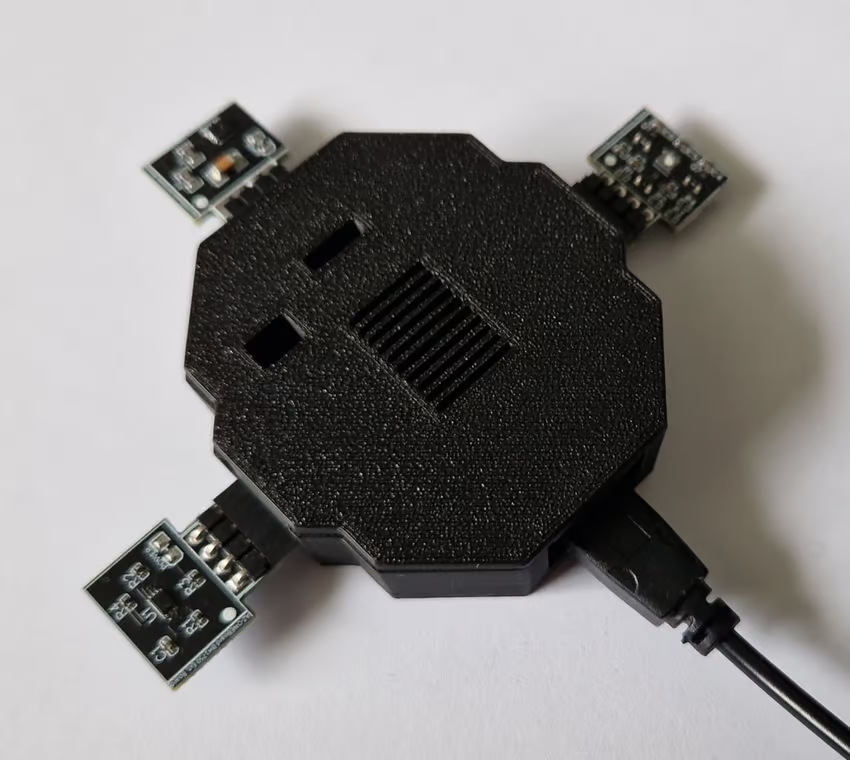
The AZ ONEBoard is a development board from the electronic components seller AZ Delivery based on ESP8266. Similarly to Adafruit’s STEMMA system, it’s intended to ease the entry into embedded development with sensors that can be easily plugged into a standardized interface, without requiring soldering.
I got a few sets of those with sensor modules for temperature, humidity, volatile organic compounds (VOC, and by extension eCO2), and brightness so I could get some sensors into the still-sensorless spots in my apartment.
There is relatively little content about this board on the Internet, so I thought it might make sense to share my ESPHome config to save a potential future reader the effort of reading the docs and an I2C scan.
How it works🔗
Most of the broken out pins on the board provide 3.3V, GND, and I2C (SDA, SCL). There is one header for 3.3V, GND, as well as one analog and digital pin each, but I’m not using those.
First, pick the right chip version:
esp8266:
  board: esp01_1m
I2C runs on the standard pins used by the ESP8266:
i2c:
  sda: GPIO4
  scl: GPIO5
  scan: true
  id: bus_a
Getting all available pre-made sensors to work just requires using the right I2C addresses:
sensor:
  - platform: bh1750
    name: "Brightness"
    address: 0x23
    update_interval: 15s
  - platform: sgp30
    eco2:
      name: "eCO2"
      accuracy_decimals: 1
    tvoc:
      name: "TVOC"
      accuracy_decimals: 1
    store_baseline: yes
    address: 0x58
    update_interval: 15s
  - platform: sht3xd
    temperature:
      name: "Temperature"
    humidity:
      name: "Humidity"
    address: 0x44
    update_interval: 15s
The update intervals are pretty arbitrary and weren’t picked with any specific reason in mind.
The rest of the configuration is not specific to this device.
2025-07-25 update: Dealing with the annoying LEDs🔗
Fortunately, this board doesn’t come with the annoyingly bright hard-wired blue power LED that many others have, but there are still two LEDs hard-wired to TX and RX. They flash whenever ESPHome logs something, which, even with adjusted logging settings, happens. This is annoying in an otherwise dark appartment.
The board is so niche that nobody appears to have designed a printable case for it before, so here is my take. The lid isn’t a perfect friction fit, so I keep it together with a rubber band. Not perfect, but good enough.
That hides the flashing LEDs well enough that they are no longer annoying.